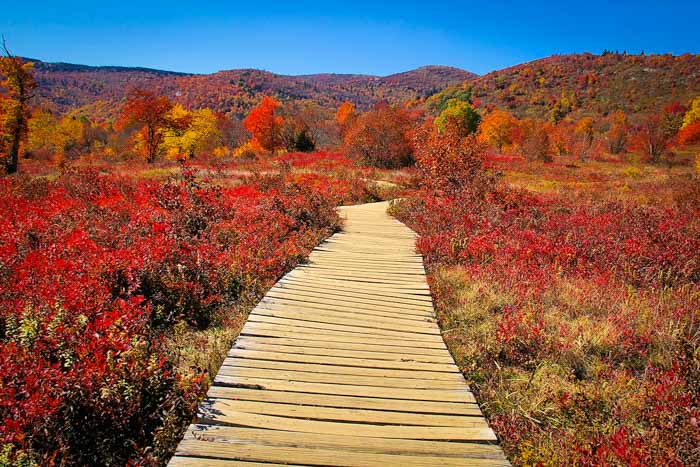
The fall foliage show in the mountains and foothills surrounding Asheville in western North Carolina brings a kaleidoscope of leaf colors for many weeks. Our Blue Ridge and the Great Smoky Mountains have one of the longest autumn color seasons in the country, thanks to our many 6,000-foot peaks (highest in the eastern USA), deep valleys, and varying microclimates. Experience a 5-week span of color that slowly descends from the tallest ridges down to the lowest valleys. During the past 20 years, we've tracked the foliage peak times and the best places to see. (Feature Photo: Graveyard Fields)
Blue Ridge Parkway & Mountains Fall Color Forecast 2024
Leaf peepers ask: “When is peak color?” Great news... we have many weeks of autumn color in our mountains and foothills. Since you find the areas of the best color by simply driving the Blue Ridge Parkway or other scenic roads up and down the ridges, you don't have to worry about exact dates. The elevation is the biggest factor for the time of color change. Also, chilly sunny weather speeds up the color change, and warm weather and rain prolong it. See the many details below!
Our Typical Peak Foliage Color Timeline - Don't focus on exact dates since nobody can predict mother nature.
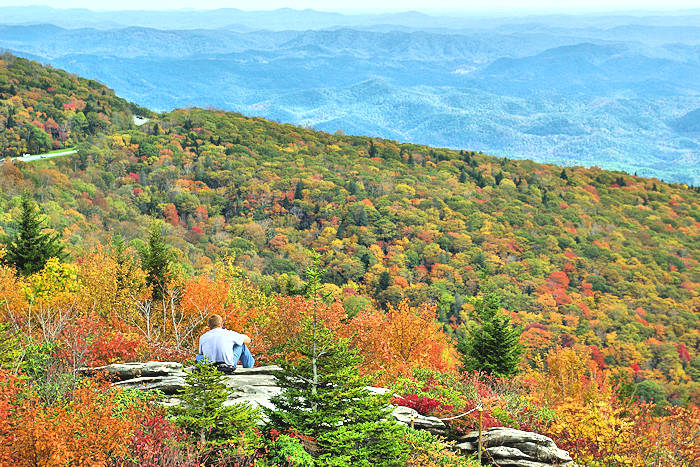
- September Last Week: Spotty color begins at 6,000+ feet in the highest mountains plus on high rocky ridges, including Rough Ridge and Graveyard Fields on the Blue Ridge Parkway.
- October First Week: Colors transform above 5,000 feet elevation, including Mount Mitchell and Grandfather Mountain. Mile-high Beech Mountain is a great place to stay for refreshing temperatures. South on the Parkway, head to Waterrock Knob and Black Balsam areas. Hike & picnic atop both Max Patch and Roan Mountain on the AT.
- October Second Week: 4,000-5,000 feet elevation. Best colors really pick up steam, including Mount Pisgah and Devil's Courthouse areas south on the Blue Ridge Parkway. The mountains surrounding Waynesville and Cashiers peak, including Whiteside Mountain with the Shadow of the Bear. Also, see the colorful highest ridges of the Great Smoky Mountains National Park and drive the Cherohala Skyway. Camp at Lake Santeetlah.
- October Third Week: 3,000-4,000 feet elevation. The ultimate week for the most color includes large sections of the Blue Ridge Parkway. Check out Little Switzerland off the Parkway, as well as Bakersville and Spruce Pine. This also includes much of Pisgah National Forest near Brevard. Drive the Forest Heritage Scenic Byway. Top hikes there include Looking Glass Rock or Cradle of Forestry. North of Asheville, the best color will be Banner Elk, and hikes to Table Rock and Hawksbill Mountain at Linville Gorge. West of Asheville, head to Maggie Valley, Cherokee, and Bryson City.
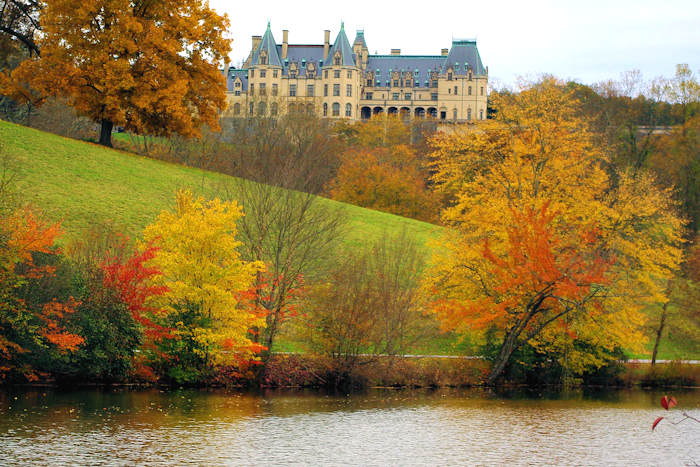
- October Fourth Week: 2,000-3,000 feet elevation. The city of Asheville, French Broad River, and Biltmore show their best color, along with many of our small towns, including Sylva and Saluda. It's a great time for a waterfall hike in DuPont State Forest or a stroll at the NC Arboretum.
- November First Week: 1,000-2,000 feet elevation. Color fills the lush Hickory Nut Gorge at Chimney Rock. See the fall reflections on Lake Lure. Also, hike and camp at Lake James and South Mountains State Parks east of Asheville. The leaf progression concludes in the foothills around Marion, Rutherfordton, and Tryon Foothills Wine Country.
Note: We tweak this forecast depending on weather patterns and our observations. Please remember that locations for peak color are estimations based on previous years. Also, areas at the exact same elevation often change at different times, depending on sun exposure, soil conditions, and more.
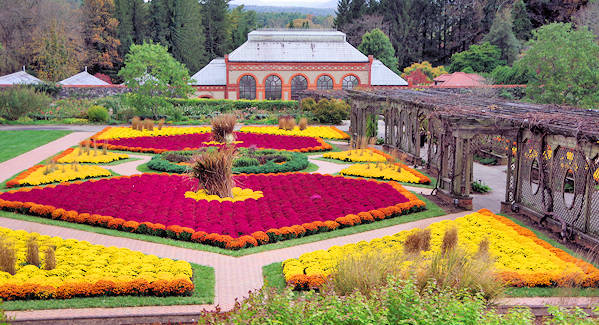
Fall color on Biltmore Estate includes the massive mum display in the Walled Garden. See our Fall at Biltmore Guide.
Blue Ridge Parkway Top Stops
One of America's top scenic drives is the best place to see the autumn show. See our 20 Parkway Top Fall Stops near Asheville.
Fall Events
There are many street festivals and autumn-themed events in September and October in Asheville and nearby small towns. See our Favorite Fall Festivals.
Best Photo Spots
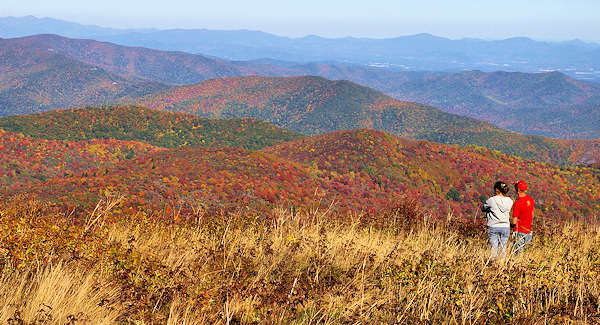
For ideas, go to our Blue Ridge Mountains Fall Photo Tour. Find our top Scenic Drives and top Mountaintop Hikes with panoramic views.
Autumn Leaf Viewing Tips
Here are some of our tips for a fabulous fall getaway:
- Make your lodging reservations ASAP at our top B&Bs, cabins, and hotels. Many book up weekends well in advance.
- To avoid the biggest crowds and to save on lodging, stay Sunday through Thursday nights. Saturdays during October are very busy everywhere!
- If you are exploring the outdoors in our national parks and forests, research first. Frequently, you will not have cell or Internet service in remote areas, including many hiking trails and waterfalls.
- With the Blue Ridge Parkway's great variation of elevation, it is the easiest place to find color during most of October. The elevation of the Parkway in Asheville is approximately 2,200 feet, and it rises to 6,000+ feet as you drive north or south. When you find a particular area of brilliant foliage, take a hike, picnic at an overlook, or detour on an intersecting road. Be patient and expect slow traffic, especially Saturdays and Sundays. Since the Parkway has limited signage for things to do along the road, see our Blue Ridge Parkway Top 20 Fall Stops.
- If you encounter fog and low clouds on the Blue Ridge Parkway, don't despair. The weather changes rapidly, so it could be sunny around the next bend. In mid to late October, snow or ice is possible at the higher elevations. Road closures and conditions on the Blue Ridge Parkway, along with weather reports, are available by calling the Parkway information line at (828) 298-0398.
- Bringing the dog? See our Pet-Friendly Guide.
- Bring a sweater or jacket. While it might be 70 and sunny in Asheville, it could be 20 degrees cooler at higher elevations. Rainy day? Here are some indoor options for things to do.
- Take a picnic or snacks, especially if you are driving the Parkway. Restaurants and stores can be hard to find in the most scenic areas.
- For visits to Biltmore Estate, buy your tickets in advance to save money and to get your preferred house tour time. See our Fall at Biltmore Guide for details.
- Fill up the gas tank before leaving the city. Gas stations are sparse in remote areas, and there are none along the Parkway.
- Don't rely 100% on your GPS to navigate our mountain roads. That's a good way to get lost. Take a map or our written directions for the many places we feature.
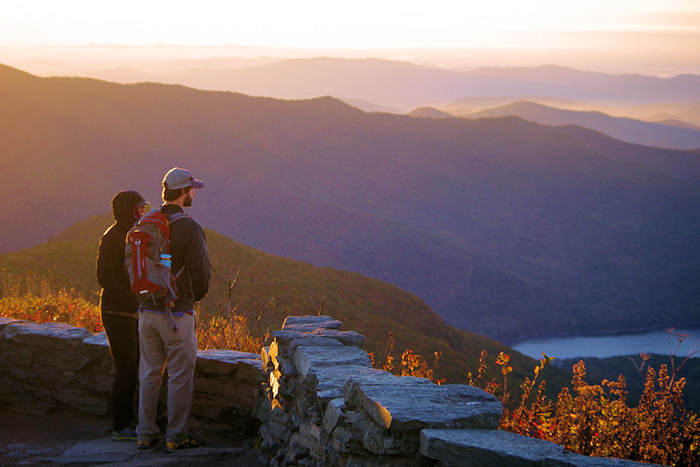
- Take your camera. The warm light of the early morning or late afternoon can create especially dramatic images. Rainy days often provide the most striking and rich photos! Morning fog also creates dramatic photo opportunities.
- Enhance fall colors by wearing polarized sunglasses.
Asheville Fall Things to Do

North Carolina Arboretum
Stroll through a variety of gardens and on peaceful woodland trails, located in Asheville adjacent to the Blue Ridge Parkway. Don't miss their impressive bonsai garden exhibit and many special events during the year.

Navitat Canopy Adventures
Experience the zipline canopy tour USA Today called “one of the best in the nation!” Just 20 minutes from Asheville, Navitat has two very different courses with the longest zip line at 3,600 ft.… read more
Experience the zipline canopy tour USA Today called “one of the best in the nation!” Just 20 minutes from Asheville, Navitat has two very different courses with the longest zip line at 3,600 ft. long.
Great Smoky Mountains Railroad
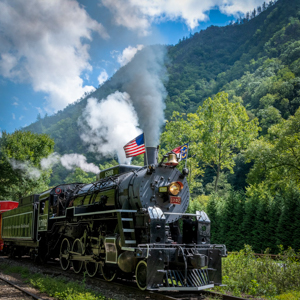
Take a scenic train ride on excursions along the Nantahala and Tuckasegee Rivers, over the mountains, across valleys and through tunnels. Choose from a variety of train adventures departing from… read more
Take a scenic train ride on excursions along the Nantahala and Tuckasegee Rivers, over the mountains, across valleys and through tunnels. Choose from a variety of train adventures departing from Bryson City. Many special event train rides including beer, wine and Polar Express.

300 Things to Do
See our master list of places to see and things to do in the western North Carolina mountains, including Asheville and our many small towns.
See our master list of places to see and things to do in the western North Carolina mountains, including Asheville and our many small towns.

Packages & Specials for Asheville & Mountains
Pick a package or special perfect for your vacation, with discounts and travel deals for hotels, resorts, bed and breakfasts, country inns and cabin rentals in the North Carolina mountains.
Pick a package or special perfect for your vacation, with discounts and travel deals for hotels, resorts, bed and breakfasts, country inns and cabin rentals in the North Carolina mountains.
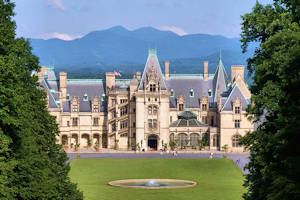
Experience Biltmore
Take in the grandeur of our country's largest home, the "Downton Abbey" of America. Explore the many rooms inside the house, walk through breathtaking landscapes and gardens, taste vintages at the… read more
Take in the grandeur of our country's largest home, the "Downton Abbey" of America. Explore the many rooms inside the house, walk through breathtaking landscapes and gardens, taste vintages at the winery and enjoy fine dining. See many things to do with our detailed insider's guide!

Winery Visits & Tours
In addition to the nation's most visited winery at Biltmore, take a winery tour in the foothills area including around Hendersonville and Morganton. Sample the local wines while enjoying the… read more
In addition to the nation's most visited winery at Biltmore, take a winery tour in the foothills area including around Hendersonville and Morganton. Sample the local wines while enjoying the mountain views. See our Top Wineries to see in western North Carolina.
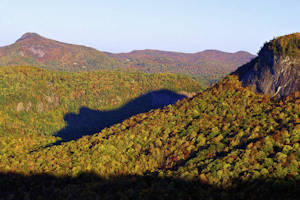
Shadow of the Bear
See this unique fall natural phenomenon in Jackson County just for a few weeks each year, evenings along US 64 near Cashiers in Nantahala National Forest.
See this unique fall natural phenomenon in Jackson County just for a few weeks each year, evenings along US 64 near Cashiers in Nantahala National Forest.

Farm Visits & Tours
Visit farms and learn about their local food. See buffalo and alpacas, sample local cheeses, watch bees make honey, visit wineries, pick apples and more. Plus, tour historic farms at Biltmore and… read more
Visit farms and learn about their local food. See buffalo and alpacas, sample local cheeses, watch bees make honey, visit wineries, pick apples and more. Plus, tour historic farms at Biltmore and in the Great Smoky Mountains.

Downtown Asheville
Spend a day exploring downtown, with hundreds of locally-owned shops and galleries, museums, restaurants, breweries, and pubs. Visit Pack Square Park, dance at the Drum Circle, go to a festival or… read more
Spend a day exploring downtown, with hundreds of locally-owned shops and galleries, museums, restaurants, breweries, and pubs. Visit Pack Square Park, dance at the Drum Circle, go to a festival or enjoy street performers. See our favorite things to do!
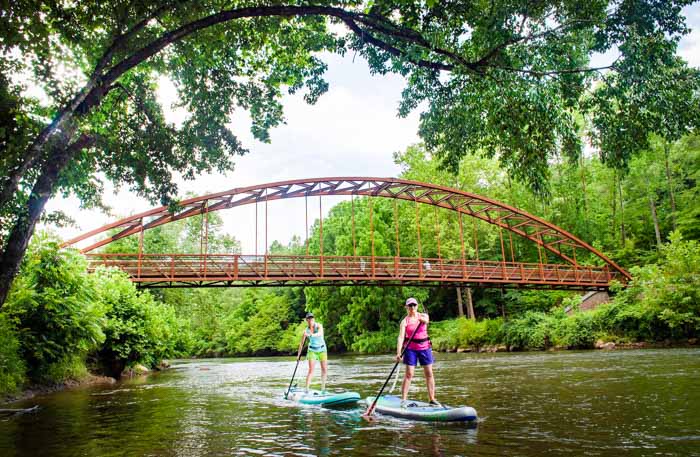
Top 75+ Outdoors - Asheville & NC Mountains
Explore our mountains with hikes, waterfalls, rivers, lakes and many thousands of acres of national forest and park land. Get outside in the Blue Ridge and Great Smoky Mountains with our 70… read more
Explore our mountains with hikes, waterfalls, rivers, lakes and many thousands of acres of national forest and park land. Get outside in the Blue Ridge and Great Smoky Mountains with our 70 favorite things to do.

Weekend Getaways: Discover Top 40 Coolest Mountain Small Towns Near Asheville
There are lots of options if you want to plan a few fun day trips while you are in Western North Carolina. Explore our favorite cool small towns in the NC mountains near Asheville, each with its… read more
There are lots of options if you want to plan a few fun day trips while you are in Western North Carolina. Explore our favorite cool small towns in the NC mountains near Asheville, each with its own personality, local shops and restaurants, friendly residents, and relaxed atmosphere.

Top Guided Tours & Experiences
Take a guided tour for sightseeing, art, wildlife, history, food, beer, waterfalls, wellness and more in Asheville and western North Carolina. See our list of favorites.
Take a guided tour for sightseeing, art, wildlife, history, food, beer, waterfalls, wellness and more in Asheville and western North Carolina. See our list of favorites.

Top Art Galleries
Visit a gallery to be amazed at a big variety of local art and craft, including glass, paintings, pottery, and every other medium you can imagine. Asheville and the North Carolina mountains are… read more
Visit a gallery to be amazed at a big variety of local art and craft, including glass, paintings, pottery, and every other medium you can imagine. Asheville and the North Carolina mountains are home to hundreds of world-class artists. Here are our favorite galleries to see their creations.
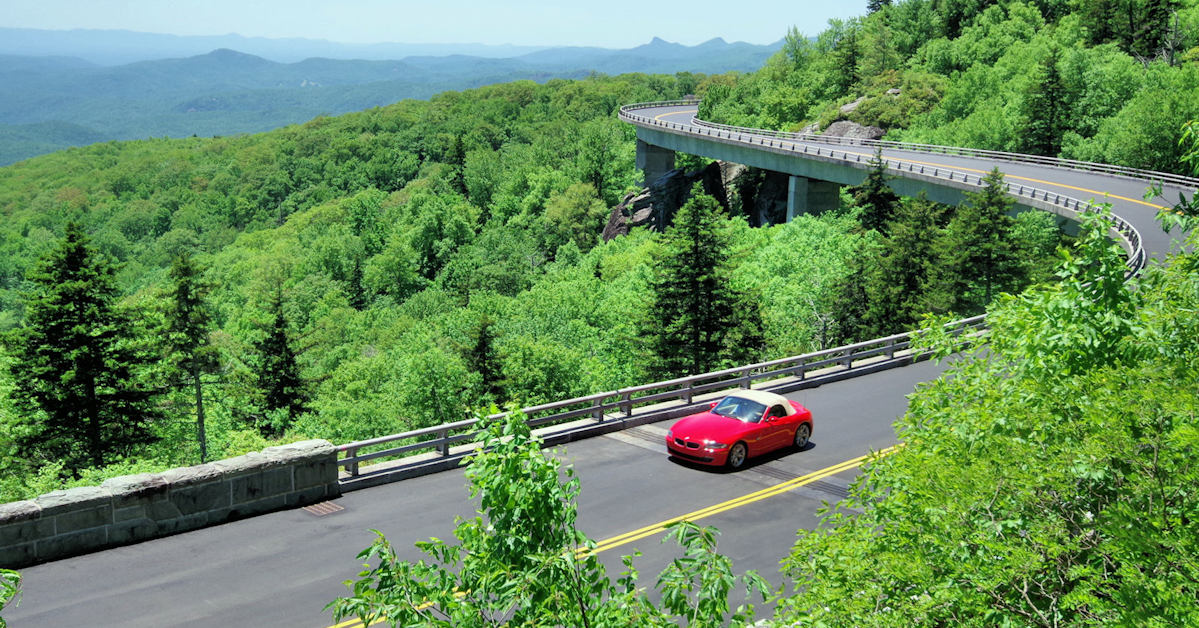
18 Scenic Drives
See gorgeous countryside, mountain views and charming communities on a windshield tour via national and state scenic byways near Asheville. Lots of opportunities for stops along the way.
See gorgeous countryside, mountain views and charming communities on a windshield tour via national and state scenic byways near Asheville. Lots of opportunities for stops along the way.
Top 20 Picnic Spots
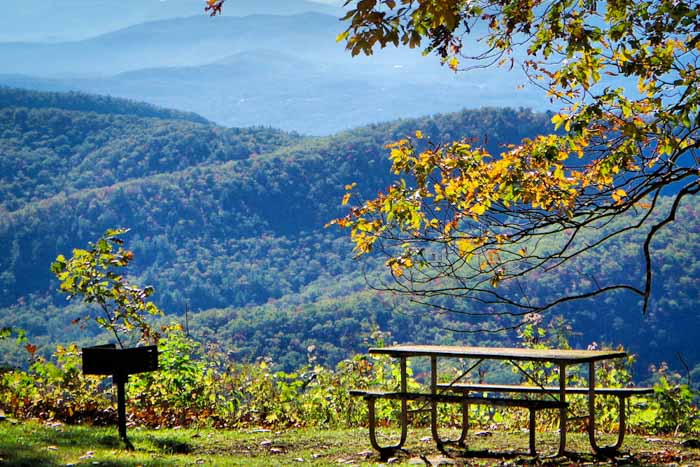
Dine outdoors in nature! Plan a picnic at some amazing locations where you can enjoy sweet views.
Dine outdoors in nature! Plan a picnic at some amazing locations where you can enjoy sweet views.

Blue Ridge Parkway Top 50
Drive the Parkway north or south from Asheville and quickly climb the Blue Ridge Mountain ridge to see breathtaking vistas. You can reach elevations of 5,000+ ft. Our mile-by-mile guide of the… read more
Drive the Parkway north or south from Asheville and quickly climb the Blue Ridge Mountain ridge to see breathtaking vistas. You can reach elevations of 5,000+ ft. Our mile-by-mile guide of the Parkway covers the 193-mile section near Asheville. Along the way, plan to stop to visit the Folk Art Center or discover one of the other fun things to do along one of the most scenic drives in the…

Great Smoky Mountains National Park Top 30 in NC
Explore the most visited national park in the country! See our top places and things to do in the Great Smoky Mountains on the North Carolina side near Asheville. Four entrances to the Park are… read more
Explore the most visited national park in the country! See our top places and things to do in the Great Smoky Mountains on the North Carolina side near Asheville. Four entrances to the Park are within 60 miles of downtown Asheville.
Waterfalls Top 60
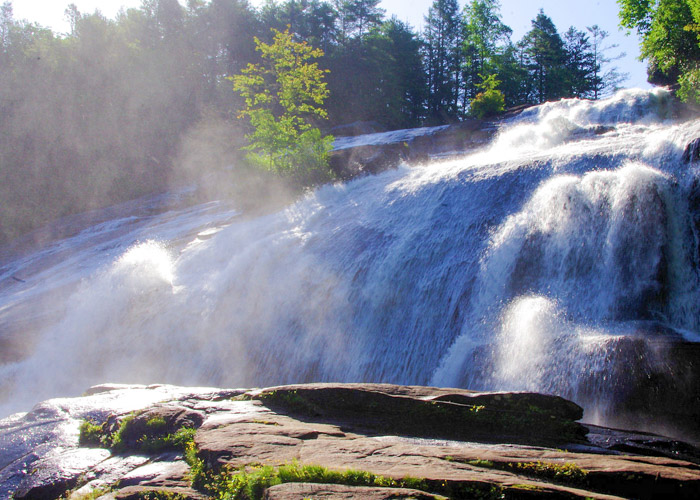
Of hundreds of waterfalls near Asheville, we picked the most spectacular falls that are easy to find. Some can be enjoyed with a short walk or even roadside. Others require a scenic hike. See full… read more
Of hundreds of waterfalls near Asheville, we picked the most spectacular falls that are easy to find. Some can be enjoyed with a short walk or even roadside. Others require a scenic hike. See full descriptions for each, with plenty of photos! Also see Waterfall Drives & Maps.
Fly Fishing
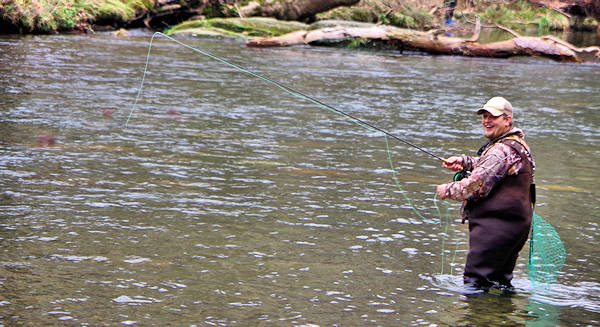
Enjoy plenty of fishing spots, whether novice or experienced. Full- and half-day guided trips, tying classes and classes geared toward women.
Enjoy plenty of fishing spots, whether novice or experienced. Full- and half-day guided trips, tying classes and classes geared toward women.

Elk in Cataloochee, Great Smoky Mountains
Watch the elk in beautiful Cataloochee Valley in the Great Smoky Mountains National Park. The best time is just before sunset. Take a picnic and tailgate. Also, tour historic buildings or hike.… read more
Watch the elk in beautiful Cataloochee Valley in the Great Smoky Mountains National Park. The best time is just before sunset. Take a picnic and tailgate. Also, tour historic buildings or hike.

Best 75 Mountain Hikes
There are thousands of miles of hiking trails near Asheville, many of which are in pristine national forests or parks. We picked our favorites and created extensive guides for each with photos and… read more
There are thousands of miles of hiking trails near Asheville, many of which are in pristine national forests or parks. We picked our favorites and created extensive guides for each with photos and details. Find hikes for all skill levels in the Blue Ridge and Smoky Mountains.
Thanksgiving & Christmas
Looking ahead, see our Thanksgiving Things to Do and Top Holiday Outings.