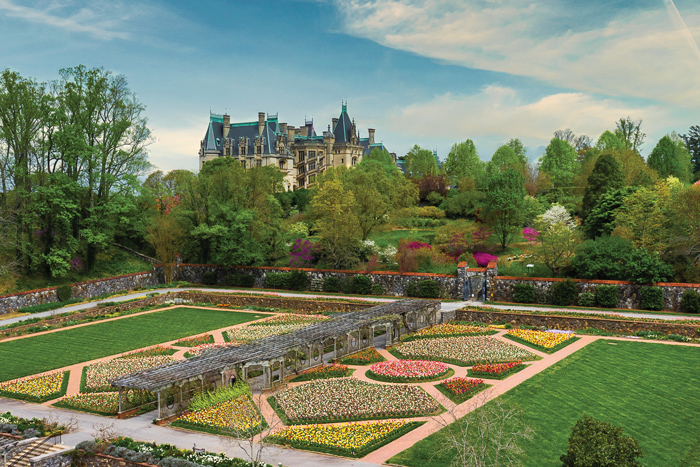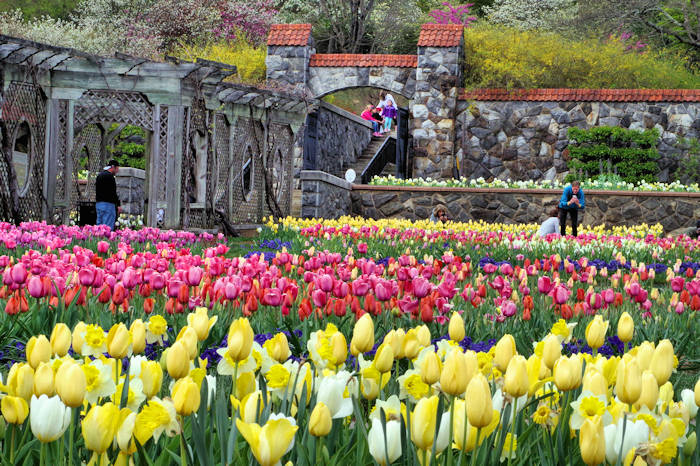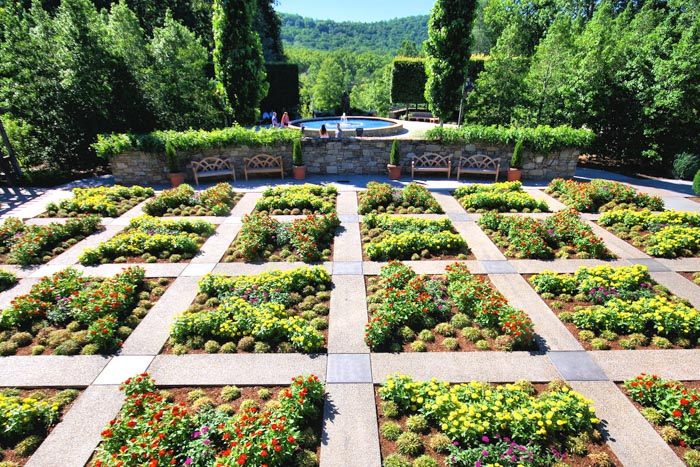
Stroll 30+ acres of formal and informal gardens adjacent to the Biltmore House, all designed by America's foremost landscape architect, Frederick Law Olmsted. After your house tour, stroll through a mile of some of the most spectacular gardens in the South. Or, you can stop at various spots on your drive from the house toward Antler Hill Village and Winery. Find a bloom calendar on Biltmore's website.
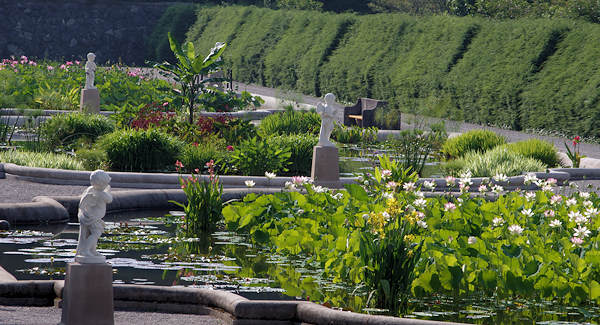
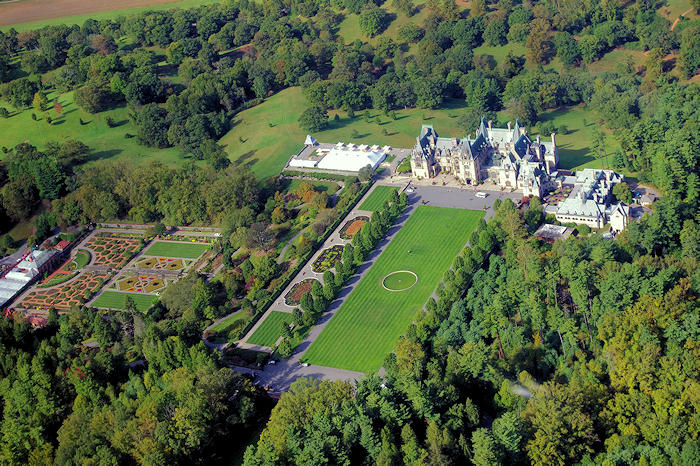
Italian Garden: Feel like you’re in France’s Versailles with statuary and lily pad-filled reflecting pools, located adjacent to Biltmore House. The three pools are filled with koi and goldfish, as well as many varieties of aquatic plants, including water lilies, elephant ears, and papyrus. In the aerial photo at the top, they are to the left of the front lawn.
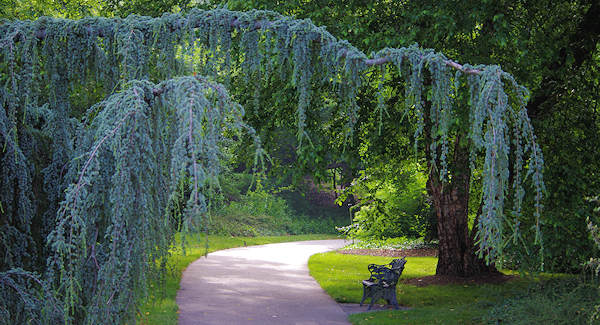
Shrub Garden: A path leads you through the four-acre Shrub Garden (to the Walled Garden), a picturesque landscape with hundreds of ornamental shrubs and beautiful trees. The wisteria covered pergola has benches for relaxing.
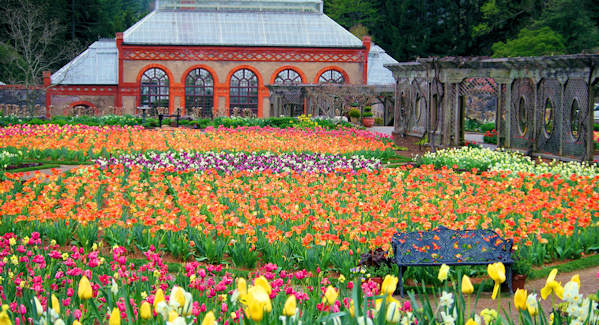
Walled Garden: The centerpiece of the gardens features a seasonal rotation of blooms, including 75,000 tulips in the spring, colorful summer annuals, and fall mums. A long arbor covered with grapevines runs down the center with themed areas, including a butterfly garden, white border, scented border, and Victorian border.
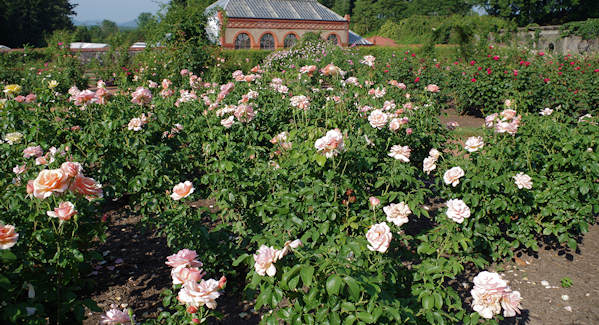
Rose Garden: The lower half of the Walled Garden features 50 varieties of roses grown at the end of the 19th-century, plus modern varieties and All–America Roses. You'll also find traditional garden structures, such as a maypole and double arch surrounded by 2,000 roses, planted exactly as it was when the Vanderbilts lived at Biltmore.
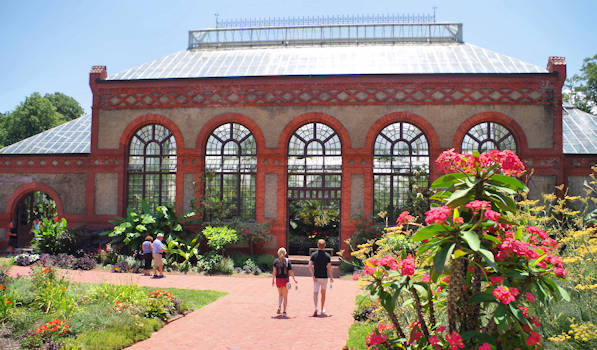
Conservatory: Walk through a tropical wonderland all year long inside the glass-roofed Conservatory, designed by Biltmore House architect Richard Morris Hunt. It's located in the Walled Garden, adjacent to the Rose Garden.
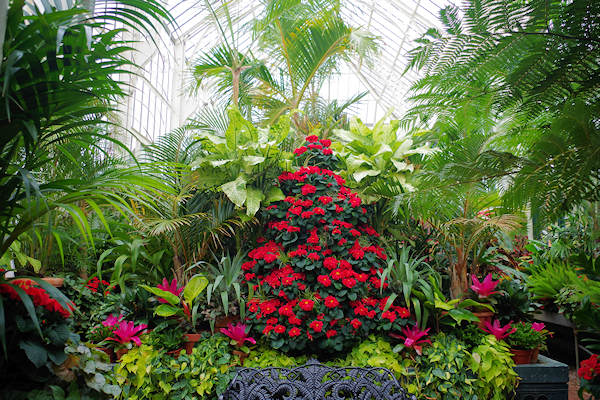
In the towering central room, the Palm House has a large collection of palms, ferns and other foliage plants. Don't miss the orchid collection. We love to browse A Gardener's Place, a fantastic shop underneath the Conservatory. There's a separate parking area if you want to drive to this area instead of walking.
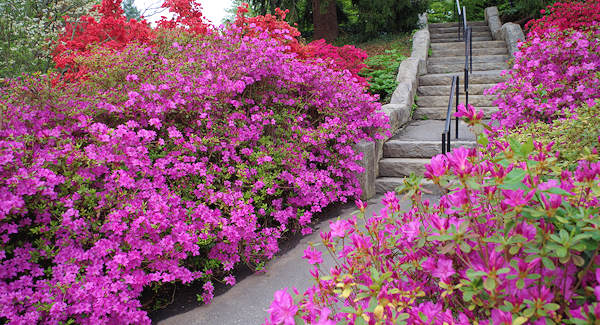
Azalea Garden: See one of the country's finest collection of azaleas via a network of pathways throughout this 15-acre section. It's filled with a million blossoms in late April and May. A 1/3-mile walk takes you from the Conservatory to Bass Pond, by a variety of towering evergreen trees. Read about Biltmore Blooms, their spring flower celebration.
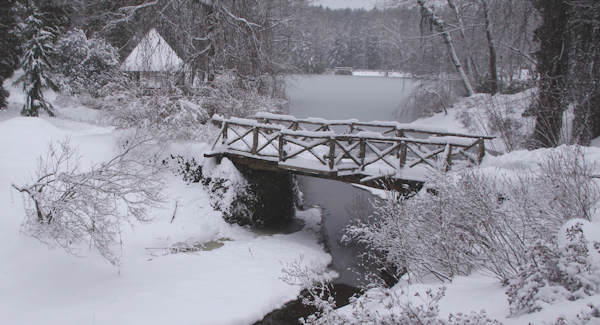
Bass Pond: Walk around Bass Lake (1/2-mile) and enjoy views from the boathouse (a great picnic spot). There are some roadside parking spots near the lake, or you can walk from the house (about 3/4-mile).
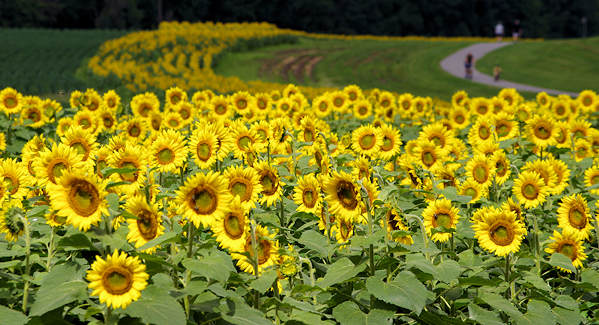
Sunflowers: Explore a mile-long sunflower patch along the greenway and road near Antler Hill Village, with several waves of blooms during late summer.
Trails: Bike or walk on a network of trails to explore even more of the Estate. Read more about the Outdoors at Biltmore.
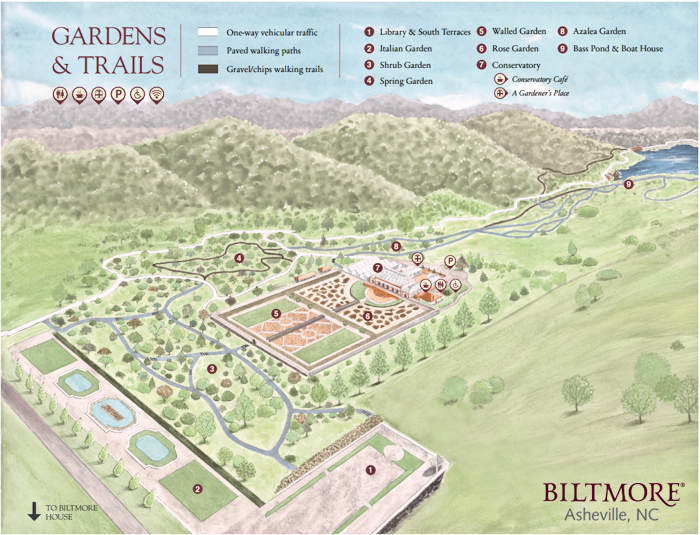
Download a PDF Map of Biltmore's Gardens.
Frederick Law Olmsted
Our country’s father of landscape architecture designed his last and largest project at Biltmore. Olmsted had completed New York’s Central Park, Boston’s Emerald Necklace, University of Chicago and Stanford before he was approached by young George Vanderbilt in the 1880s. Olmsted transformed the over-farmed, over-logged land surrounding the site of the house into a country estate, the landscaping equivalent of Hunt’s grand creation. Included in his design is the three-mile Approach Road that brings visitors to Biltmore House.