Win a Winter Lights Package!
Enter to win a free pass to the spectacular outdoor light show at The North Carolina Arboretum in Asheville and more.
During your visit to Asheville, you may see the "Warren Wilson" name on menus in some of the "farm to fork" restaurants in downtown Asheville that feature local foods. The farm at Warren Wilson sells sustainably raised grass-fed beef and College-grown grain fed pork in quarters and halves, butchered and wrapped according to cuts. This is just one example that shows the uniqueness of Warren Wilson.
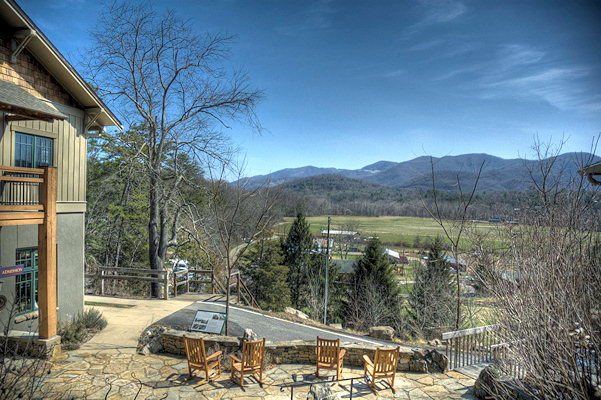
Named the "Top Green College of the South", Warren Wilson is the country’s only liberal arts college with a national student body and integrated work and service programs. Nestled in the lush Swannanoa river valley of the Blue Ridge Mountains just a few miles east of Asheville, Warren Wilson College was founded in 1894 upon a philosophy of sustainability that thrives to this day. Their education is driven by a threefold "Triad" principle: Academics for the mind, Work for the hands, Service-Learning from the heart. This is a setting that, throughout history, has inspired community, creativity, learning, and a sense of harmony with the environment.
Their campus includes 45 buildings, a 300 acre farm and an organic garden, 600 acres of forest, 25 miles of hiking trails, numerous cows, pigs, and a few bears. Students are from 40+ states and many countries.
The student run mixed-crop and livestock operation, although educational in nature, is managed as a working farm with a commitment to sustainable farming practices. The College Farm strives to cultivate student leaders with a strong work ethic, continuing an agricultural tradition dating to 1894 in the Swannanoa Valley.
The WWC garden crew is made up of about 25 students who are responsible for the daily maintenance of five acres of organically raised crops, including vegetables, fruits, cut flowers and herbs. Seasonal extension practices involve the use of a 34 x 80 heated greenhouse and two unheated hoophouses.
Community Events at Warren Wilson
The Swannanoa Gathering: This series of week-long workshops in various folk arts is held in July and August on the campus of Warren Wilson College. With a limited enrollment and an 'open' format which allows each student to select their own curriculum from a variety of courses, they offer an intimate, supportive community experience for students of all abilities, featuring a staff of some of the finest performers and teachers in the world.
Visit The Swannanoa Gathering website.
The Swannanoa Chamber Music Festival: The Swannanoa Chamber Festival Players is a group of outstanding professional musicians from Florida, New York, California, Michigan and Ohio who perform together each year at the Festival. The wind-players and pianist have been playing together at the festival for at least a decade. By working together for so many years, they have developed a mutual understanding of each other's sensibilities, resulting in performances of enormous energy and style. This "chemistry" is one of the reasons the performances are, consistently, at such a high level. Visit The Swannanoa Chamber Music Festival website.
The Swannanoa School of Culinary Arts: The Swannanoa School of Culinary Arts offers week-long hands-on immersion in a variety of culinary experiences designed to awaken and broaden the palate, lead you closer to the source of the food you prepare, and provide you with a panoply of skills that will help you celebrate the ordinary in extraordinary fashion. The mission of the Swannanoa School of Culinary Arts is to inspire a new (and revised old) generation of home chefs to gather food consciously, treat it with skill and respect, and share it with passion, furthering the notion that the most important moments we spend are those partaken with friends and family around the table.
Warren Wilson Theatre: The Warren Wilson College Theatre houses a full season of theatrical productions, concerts, and special events throughout the year. Warren Wilson Theatre productions are open to participation by members of the greater Asheville community. During the summer, it is home to the concerts of Swannanoa Gathering and the Swannanoa Chamber Music Festival.
For more, go to www.warren-wilson.edu.