Back to Asheville News & History Index
Presented by the Asheville CVB
ASHEVILLE, N.C. -- Thomas Wolfe classics nuzzle against Gail Godwin contemporary works in Malaprop's bookstore and in the University of North Carolina at Asheville's D. Hiden Ramsey Library -- gentle reminders that Asheville's literary heritage stretches across the 20th century.
Asheville attracts visitors with majestic mountains, warm hospitality, southern charm and cultural festivals. Literary figures traveling to Asheville sought more than just grace and hillsides. F. Scott Fitzgerald ventured to the Land of the Sky to visit his ailing wife, seek relief through alcohol and search for female companionship.
Fitzgerald, the author of such works as The Great Gatsby and Tender is the Night, returned to Sunset Mountain and the Grove Park Inn where he waited luxuriously while his wife received psychiatric treatment at Highland Hospital in Asheville, which closed recently.
His most famous novels detailed the lavish lifestyles of the late 1920s and he wrote a short story or two while in Asheville. Drinking and womanizing earned Fitzgerald dubious repute in the mountains.
Surrounded by the gentle elegance of the Grove Park Inn, Fitzgerald drank on the large porches, while admiring the view or making romantic company with a number of young ladies. One story says that a picture once hung in the Grove Park labeled as "F. Scott Fitzgerald and wife Zelda." Despite the caption's claim, in reality the photograph depicted Fitzgerald and one of his lovers. Long after his death, Zelda Fitzgerald perished in a fire at Highland Hospital.
Shadowed by the hazy Blue Ridge Mountains, watched over by the pale summer moon and a sky brimming with stars, and surrounded by lush greens and vibrant rhododendrons, Asheville has attracted and nurtured some of the most prolific authors of American literary tradition. Still today, local writers publish books, novels and short stories inspired by Asheville's soft, uniquely Southern ways and the natural settings surrounding Buncombe County.
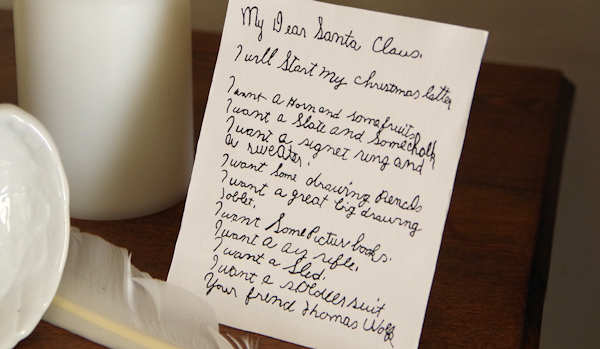
Asheville remains linked to its own favorite son -- Thomas Wolfe. The celebrated author of Look Homeward, Angel and You Can't Go Home Again retained a stormy relationship with the mountain city he called home. Born at 92 Woodfin Street in Asheville, a site now covered by the YMCA parking lot, Wolfe is perhaps the city's most recognized literary figure.
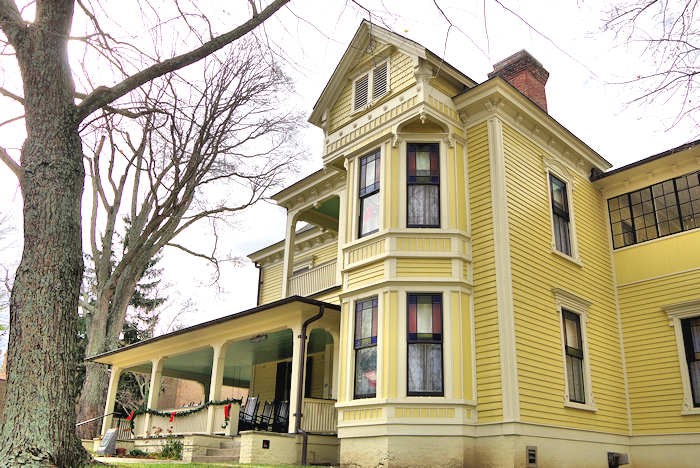
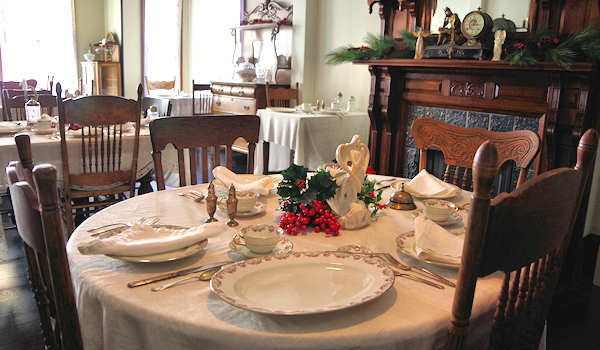
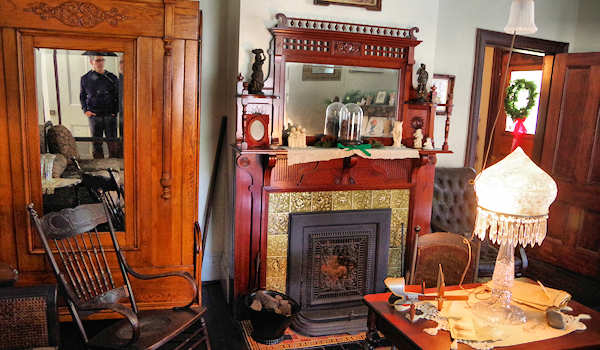
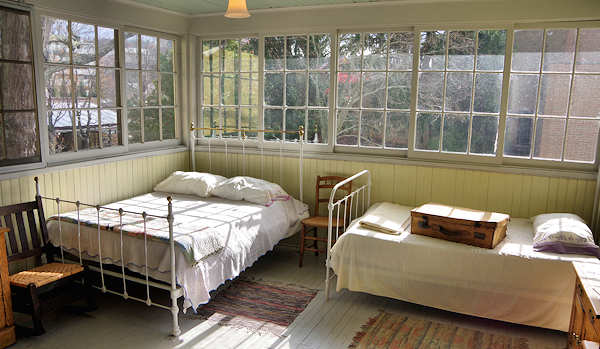
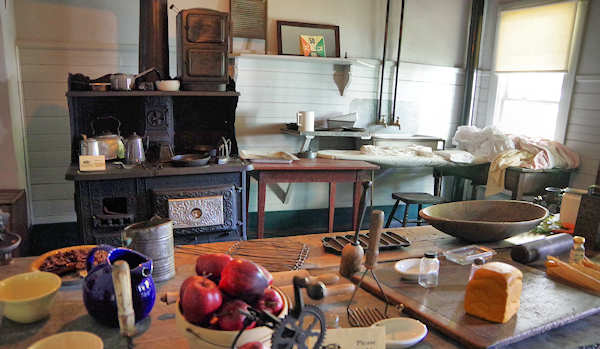
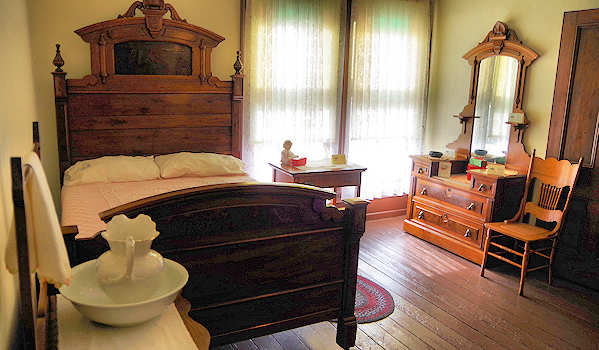
His mother, Julia Westall Wolfe, operated a 29-room boarding house on Woodfin Street called the Old Kentucky Home, now preserved as a state historic site open to the public as the Thomas Wolfe Memorial. At age 15, Wolfe left his Blue Ridge Mountain home to attend the University of North Carolina at Chapel Hill.
Published in 1929, Look Homeward, Angel received instant criticism from Asheville residents. These Asheville natives recognized quickly the autobiographical nature of the novel.
A wave of anger swept through Asheville as people read a book portraying their town as less than desirable and them as ignorant and unfriendly. The negative reviews, overall hostility, and even threats on his life confused and befuddled Wolfe, keeping him from his home until 1937.
Wolfe's rave reviews and noticeable success softened Asheville's indignation, fostering the author's gradual acceptance as a favorite son. Renting a small cabin in nearby Oteen during the summer of 1937, he completed a short story entitled "A Party at Jack's."
You Can't Go Home Again was published after Wolfe died of tuberculosis of the brain in 1938.
Asheville hosts the annual Thomas Wolfe Festival, a four-day event built around his Oct. 3 birthday. The festival highlights the life and times of the author through workshops, writing contests, tours and theatrical interpretations of his work.
Another North Carolina native and famous author made his way to Asheville in the early 1900s. Born in Greensboro, N.C., famed short story writer O. Henry established ties to Asheville by marrying Asheville native and second wife Sarah Coleman. The acclaimed author of Cabbages and Kings, The Four Million, and The Gentle Grafter also maintained an office there.
Unlike many visitors to Asheville today, it took many years for O. Henry to appreciate the beauty of the mountains. The rushed, intense life of New York City streets inspired many of his works.
In 1909, when visiting his wife Sarah Coleman Porter and daughter in Asheville, he said, "I could look at these mountains a hundred years and not get an inspiration - they depress me. A walk down Sixth Avenue-a face glimpsed-a snatch of conversation was heard and I have my story."
Born William Henry Porter in 1862, his life was a series of a few triumphs swallowed by numerous disasters and failures. Not long after marrying first wife Athol Estes, a son died only a few hours after being born. In the late 1800s he accepted a job as teller of the First National Bank of Austin. But in 1895, he was charged with embezzling more than $1,000.
A trial was scheduled for 1896 and Porter fled to Central America. There he was notified by friends that Athol was deathly ill. He returned to bury her and stand trial, where he was found guilty of embezzlement and sentenced to three years in prison. During his term, O. Henry wrote profusely to occupy his time. He lived in Pittsburgh, and finally New York after being released, talking to common men and then glorifying their lives in wonderful tales and stories.
His death from cirrhosis of the liver in New York's Polyclinic Hospital on June 5, 1910 ended a writing career that lasted 11 years. O. Henry was buried at Asheville's Riverside Cemetery not far from the grave of Thomas Wolfe.
Wolfe's simple grave marker was labeled with the following quote from Look Homeward, Angel: "The Last Voyage, The Longest, The Best." Bordered by the French Broad River, visitors can find the author's grave among those of his entire family.
A community located near Hendersonville and 26 miles south of Asheville became home to another famous American literary figure. Carl Sandburg ventured to Flat Rock in 1945 and purchased a farm he named Connemara -- derived from a town in western Ireland.
The popular poet and Lincoln biographer realized that this was the perfect place to spend time with his family and write. Sandburg's wife Lilian knew that the lush, green land would be an ideal habitat for her 200 purebred, prize-winning Nubian, Toggenburg and Saanan goats.
Sandburg usually began his writing day in the early evening and continued until the early morning hours. During these times at Connemara, he created such memorable works as Remembrance Rock and Always the Young Strangers.
Oftentimes Sandburg scribbled sentences or pounded them out on his typewriter shrouded in thick cigar smoke in his third floor study, cluttered with paper, newspaper clippings, notes and a few of his 12,000 books. Other times, Sandburg ventured behind Connemara to write while sitting on a large stone ledge. With the sweltering summer heat beating down, he became so absorbed in his work that it did not affect him.
Thomas Wolfe, O. Henry and Carl Sandburg helped establish a rich, vibrant Asheville literary tradition that continues to grow and expand. Numerous contemporary authors and poets have made Asheville their home and are inspired by Asheville's history and beautiful natural setting.
Malaprop's, a downtown bookstore located at 61 Haywood Street, is unique to Asheville and home to the works of many local writers. As part bookstore, part coffee house, Malaprop's acts as the literary hub for modern writing in the city.
Information is consistently available at Malaprop's concerning local readings, Writer's Workshop meetings and writing programs at the nearby University of North Carolina at Asheville, Western Carolina University, Mars Hill College and Warren Wilson College.
A number of writers claim an Asheville heritage and are inspired by the city and its mountains. Locally owned Malaprop's and other bookstores in Asheville sell the published works of many indigenous authors.
Prolific novelist, historian and lecturer Wilma Dykeman receives inspiration for her works from her Asheville home. The Place -- the sturdy, wooden-frame house where she was born and reared, is located at the head of Beaverdam in north Asheville.
"This is my home, no matter where else I might be. The streams, the rocks, are the 15 acres of my childhood imagination and discovery," Dykeman said in a 1991 Asheville Citizen-Times article.
Author of 16 books, Guggenheim Fellow and winner of many literary recognitions and awards, Dykeman never fails to credit her mother, Bonnie, as a source of life for her writings. The Tall Woman, often considered Dykeman's most popular and best-loved novel, focuses on her mother's essence and spirit, revealed through the character, Lydia McQueen.
With her writing Dykeman has traveled throughout the world. Yet she roots herself in The Place adjacent to the gently flowing French Broad River.
"Growing up on this little stream, hearing it one night in flood, makes me know that you can start at any little place and go out into the world," Dykeman said
Contemporary novelist and Asheville native Gail Godwin makes many allusions to her hometown in her books. Her recent novel entitled Father Melancholy's Daughter was published in 1991 and contains such themes as religion, depression and relationships. "Sometimes at night, if I'm tired, I'll snatch up some pages and kind of surprise them. Sometimes I'm surprised it's so good. Sometimes I have to start over again," Godwin said in a May 1, 1991 Asheville Citizen-Times article. Godwin now lives in Woodstock, N.Y. and continues working.
Kathleen Cole, Godwin's mother who died in a 1989 car wreck, worked as a reporter during World War II and interviewed Julia Westall Wolfe several times. For a short time after graduating from the University of North Carolina at Chapel Hill, Godwin followed in her mother's footsteps by serving as a Miami Herald reporter.
Born on Dec. 13, 1925, Asheville native and writer John Ehle covered topics in his novels ranging from civil rights to Parisian culture. The 1961 novel Lion in the Hearth details the struggles of a Western North Carolina family. The Road, a 1967 novel, reveals the hardships endured by those constructing the railroad from Old Fort to Ridgecrest -- two small communities not far from Asheville.
After serving in the army during World War II, he earned a bachelor's degree from UNC in 1949 to begin teaching. From 1962-64, Ehle served as a special assistant to Gov. Terry Sanford.
As Sanford's "idea man," he was responsible for promoting the Governor's School, the North Carolina Film Board, the Advancement School, the Learning Institute of North Carolina, and the North Carolina School of the Arts. Ehle's novel, Move Over Mountain, published in 1957, focuses on the struggles of an African American living in the Piedmont region of North Carolina.
His work Kingstree Island was published in 1959 and tells the story of a young man standing up to the tyranny of the ruler of Ocracoke -- an island on North Carolina's Outerbanks. Ehle has written 12 books dealing with life in North Carolina and presently lives in Winston-Salem.
Two other local authors build writing experience and inspire others to improve writing skills as professors at the University of North Carolina at Asheville. David Hopes and Peggy Parris each have published numerous works and love to share with students what writing means to them and how it can be done well.
Hopes teaches literature classes, while Parris instructs basic writing, advanced creative writing, and masters of liberal arts classes. Aspiring authors who gather to share work tap both Parris and Hopes for insight on getting published and the criteria for descriptive fiction writing.
Hopes has written numerous plays including The Christmas Count and The Book of the Mystic, both of which have been produced in New York on Broadway. Other plays he has written, such as Godzilla, have been produced locally at UNCA's Lipinsky Auditorium by the Pisgah Players from Hendersonville. Another play, Sea's Edge, will be performed at the Diana Wortham Theatre in November 1993.
In his most recent book, A Sense of the Morning, Hopes describes the beauty of land and mountains in and around Asheville in intricate, complex ways with insight excelled by few. Throughout the book, Hopes shows the important co-existence of man and nature, and how they must have one another to survive.
Peggy Parris has enjoyed success with the 1992 publication of her novel Waltzing in the Attic. Her first work of fiction, published in both the United States and England, received positive reviews everywhere.
The novel portrays the shattered life of a country woman from the Midwest who suffers abuse by her father and brother. She rises above the humiliating circumstances to plot a subtle revenge against these men. The most climactic action of the novel occurs when the tortured woman at age 70 tells the family the story of her physical abuse.
Ten miles east of Asheville, Swannanoa's Warren Wilson College also earns national recognition and distinction. This small, private, liberal arts college offers one of only two creative writing graduate programs in the United States. Lectures and readings by prominent contemporary authors are held frequently at Warren Wilson.
Although it closed its doors in 1957, Black Mountain College acquired distinction 15 miles east of Asheville. Dismissed from his teaching position at Florida's Rollins College for his unruly style in the classroom, classics professor John Andrews Rice founded this unique institution at Camp Rockmont.
Avant-garde poets, artists and writers from all over the world flocked to this haven of acceptance during the 1930s and 1940s. German-born Josef Albers was one of many seeking intellectual freedom in Black Mountain as the Bauhaus movement in Germany increasingly became censored by the Nazis.
For only 24 years, this innovative education center nurtured original ideas and altruism. Thorton Wilder, John Dewey, Albert Einstein and Henry Miller are just a few of the great intellectuals who visited and lectured at Black Mountain.
Buckminster Fuller designed and built his first geodesic dome at the tiny college. In 1949, poet Charles Olsen became a central figure on campus making Black Mountain a center for experimental writing by reviving the small press movement in the U.S.
Only 1,200 students registered at Black Mountain College, with just 60 securing degrees there. The interactive teaching style established at this unique institution paved the way for the tenets of a contemporary liberal arts education: the exchange of ideas, progressive attitudes and tolerance. During an era of critical debate over the state of American higher education, Black Mountain College helped shape the future of all American colleges and universities.
The mingling of golden literary treasures with the prize-winning pieces of today's most celebrated authors lends to Asheville's distinction as a city of writing. Gail Godwin flies into town to do a reading from her latest novel. Hopes and Parris teach future authors the essentials of writing. Thousands of visitors annually peruse Sandburg's Connemara replete with dusty books, pages and notes wrinkled with age, bleating goats and the distant laughter of a happy family. Those same visitors walk through the Old Kentucky Home where Wolfe received inspiration for his world-famous novels. Undoubtedly, Asheville's rich tradition in literature and fiction writing has strengthened with each passing generation.
For more information on Asheville and the Asheville area, call 800/280-0005 or write to Asheville Convention and Visitors Bureau, P.O. Box 1010, Asheville, N.C. 28802-1010.
Ashville or Asheville?
Asheville Education: Colleges, Universities, and Schools |