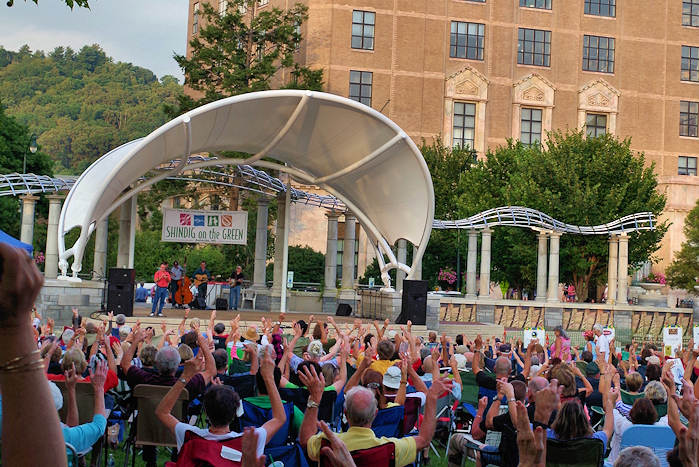
Experience a variety of North Carolina mountain live music and dance traditions, including bluegrass, old-time, blues, and clogging in and near Asheville. Thanks to the Blue Ridge Music Trails of NC project, you can easily find events and places to go throughout the year. Often you get up close to musicians at impromptu jam sessions or concerts. Be sure to wear your dancing shoes, as locals love to teach their moves. Appalachian mountain music includes many instruments, styles, and sounds. There are many opportunities to enjoy for free! The photo above: Shindig on the Green
The traditional Blue Ridge Mountain music in North Carolina that has evolved over two centuries has influenced many other American music styles. The Blue Ridge Music Trails showcase and promote traditional music in all of Western North Carolina, a program of the Blue Ridge National Heritage Area in partnership with the North Carolina Arts Council.
Go to the Blue Ridge Music Trails website for a calendar of live music and dance events. Below are just a few of the possibilities.
Blue Ridge Music Trails Weekly Music Sampler
Sundays
- The Orchard at Altapass (1025 Orchard Rd, Spruce Pine) - Mountain Music (May-October)
- Mountain Gateway Museum (24 Water St, Old Fort)- Old Fort Afternoon Jams w/ Bluegrass, Old-Time, Gospel (year-round)
Mondays
- Oskar Blues Brewery (342 Mountain Industrial Dr, Brevard) - Mountain Music Mondays
Tuesdays
- Isis Restaurant & Music Hall (743 Haywood Rd, Asheville) - Bluegrass Jam (year round)
Wednesdays
- Jack of the Wood (95 Patton Ave, Asheville) - Old-Time Mountain Music Jam (Wed-Sat, year round)
- Funkatorium (147 Coxe Ave, Asheville) - John Hartford Bluegrass Jam (year round)
Thursdays
- Zuma Coffee (7 North Main, Marshall) - Bluegrass Jam (year round)
- Silvermont Mansion (364 E Main St, Brevard) - Mountain Music Jam (year round)
Fridays
- Fletcher Feed & Seed (3715 Hendersonville Rd, Fletcher) - Bluegrass, Gospel, Country w/ Dancing (year round)
- The Depot (282 South Main St, Marshall) - Old-Time, Bluegrass, Country w/ Dancing (year round)
- Woody’s Original Mountain Music (3354 Highway 70 West, Marion) - Bluegrass Jam (year round)
- Groovin' on the Green (35 US-64, Cashiers) - Variety (May-August)
- Waynesville Mountain Street Dances at the Courthouse (285 N Main) on four summer nights
- Concerts on the Creek (Bridge Park:76 Railroad Ave) (Memorial Day - Labor Day Weekend)
Saturdays
- Killough’s Music & Loan (104 South Main St, Marion) - Saturday Morning Jam w/ Bluegrass, Gospel & Old-Time (year round)
- Fletcher Feed & Seed (3715 Hendersonville Rd, Fletcher) - Bluegrass Gospel & Country (year round)
- Historic Rickman Store (251 Cowee Creek Rd, Franklin) - Bluegrass Jam (Late Spring-December)
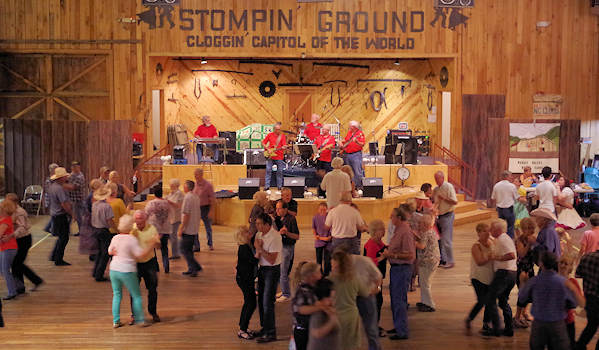
Dancing & mountain music on spring, summer and fall Saturday nights at Stompin' Ground.
Go to the Blue Ridge Music Trails website for details and a complete calendar.
Just 20 miles east of Forest City is the Earl Scruggs Center, which celebrates the life and legacy of legendary banjo master Earl Scruggs. The center features exhibits, music, history and cultural traditions of the American South.
Blue Ridge Music Festivals

Earl Scruggs Music Festival
Sep 01, 2023 - Sep 03, 2023Held at the Tryon International Equestrian Center, enjoy 20+ artists on three stages, including Old Crow Medicine Show, Jerry Douglas, Jim Lauderdale, Alison Brown, Nitty Gritty Dirt Band, and… read more
Held at the Tryon International Equestrian Center, enjoy 20+ artists on three stages, including Old Crow Medicine Show, Jerry Douglas, Jim Lauderdale, Alison Brown, Nitty Gritty Dirt Band, and Earls of Leicester. Book early for camping spots, lodging, and after-hours festivities.

Heritage Weekend at Folk Art Center
Sep 16, 2023This free festival features traditional music, dancing and heritage craft demonstrations. A highlight is the World Gee Haw Whimmy Diddle Competition on Saturday.
This free festival features traditional music, dancing and heritage craft demonstrations. A highlight is the World Gee Haw Whimmy Diddle Competition on Saturday.

Mountain Heritage Day
Sep 30, 2023Held on the campus of Western Carolina University, this long-running outdoor celebration features the sights, sounds, crafts, and flavors of yesteryear. Get a taste of southern Appalachian culture… read more
Held on the campus of Western Carolina University, this long-running outdoor celebration features the sights, sounds, crafts, and flavors of yesteryear. Get a taste of southern Appalachian culture, art, and music. 10 AM-5 PM. Free.

Mars Hill Heritage & Music Festival
Oct 07, 2023Two long-running festivals celebrate mountain craft, music and dance: the Heritage Festival and the Bascom Lamar Lunsford Music Festival. Both held downtown, adjoining Mars Hill University. Free.… read more
Two long-running festivals celebrate mountain craft, music and dance: the Heritage Festival and the Bascom Lamar Lunsford Music Festival. Both held downtown, adjoining Mars Hill University. Free. 10 AM-4 PM. Small fee for indoor evening concert.

Harvest Festival, Stecoah Valley
Oct 14, 2023 - Oct 15, 2023Experience quintessential traditional mountain life with Appalachian dance, music, food, arts and crafts in the beautiful Nantahala National Forest at Stecoah Valley, near Fontana Lake and… read more
Experience quintessential traditional mountain life with Appalachian dance, music, food, arts and crafts in the beautiful Nantahala National Forest at Stecoah Valley, near Fontana Lake and Robbinsville.

Bluff Mountain Festival
Jun 10, 2023This free, family-friendly festival in Hot Springs (at the spa) features great old-time and bluegrass music, ballads, clogging, square dancing, as well as a silent auction and raffle of regional… read more
This free, family-friendly festival in Hot Springs (at the spa) features great old-time and bluegrass music, ballads, clogging, square dancing, as well as a silent auction and raffle of regional artwork, local crafts, vacation packages and more. 10 AM to 5 PM. Offers an array of delicious foods, too.

Mountain Dance & Folk Festival
Aug 03, 2023 - Aug 05, 2023A favorite showcase since 1928, mountain fiddlers, banjo pickers, dulcimer sweepers, dancers, balladeers, and others come together for a showcase of authentic bluegrass music and dancing in… read more
A favorite showcase since 1928, mountain fiddlers, banjo pickers, dulcimer sweepers, dancers, balladeers, and others come together for a showcase of authentic bluegrass music and dancing in Asheville.

NC State Bluegrass Festival
Aug 17, 2023 - Aug 18, 2023 - Aug 19, 2023This big outdoor concert weekend in Marion is on the grounds of Tom Johnson's Camping Center, complete with camping options, a pavilion, and dozens of performers. Single-day and weekend tickets… read more
This big outdoor concert weekend in Marion is on the grounds of Tom Johnson's Camping Center, complete with camping options, a pavilion, and dozens of performers. Single-day and weekend tickets available can be purchased in advance until May 6. Returning are some of your favorite bluegrass performers, including Rhonda Vincent, The Malpass Brothers, and more!
The Blue Ridge National Heritage Area, designated by Congress and affiliated with the National Park Service, protects, preserves, interprets and develops our natural, historical and cultural resources of Western North Carolina. Go to the Blue Ridge Music Trails website for much more.